Since a couple of months I had been telling P that I feel like getting a few empty garbage bags, filling all the stuff from your playroom and throwing it away. It was just overflowing with stuff. Honestly I don’t know where all of it comes from. We don’t even buy a lot of stuff. We hardly ever shop for toys etc. It was quite frustrating to see the shelves all filled till the brim and things falling out every time you wanted to take something out of a shelf. I was starting to get embarrassed if I would have someone over coz it was just way too messy. Every time I thought of cleaning it, I just felt it would need a LOT of time and leave it for later.
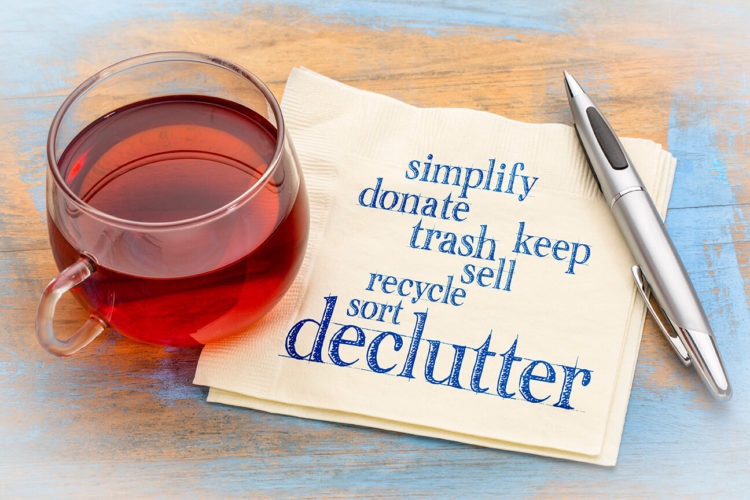
I had started some cleanup so my store room was filled with stuff I had to give away. When the lockdown started I gradually started filling that stuff up in boxes so that they can be moved out as soon as the lockdown is over. And then by chance an organisation that I’m a part of organised a 10 day Decluttering workshop, Marie Kondo way. And at the end of it they had another Minimalist expert from the USA speak to us on minimalism, Joshua Becker. While I was on the Zoom call, I made P listen in. I thought if she listens maybe she also gets inspired. And it worked.
Since that day we sit every second day and clean one part. We are taking it in small bits and pieces. I’m not jumping to do the whole thing at once coz it needs a lot of time commitment at one go. So spending an hour every second day has been doing the trick. One day we did the art shelves. Another day we did A’s book shelves. And so on and so forth.
Some tips you could use so far ( I will keep adding to this in future posts as I take you through this journey with me):
- You don’t have to do it all at once. Take a small bit at a time and spend maybe an hour or so everyday. If everyday is not possible, then every other day. Now you might say that the flow is interrupted. But there is so much to do and it’s really not possible to do it all unless I stop everything else for at least a week. And I don’t have that kind of time. So I’m taking it in bits and handle one shelf at a time. In my mind I have categorised the stuff and going that way. Will do the books first, then one corner of the playroom shelf and then the other. This way I won’t need one block of time at one go and slowly I can complete it.
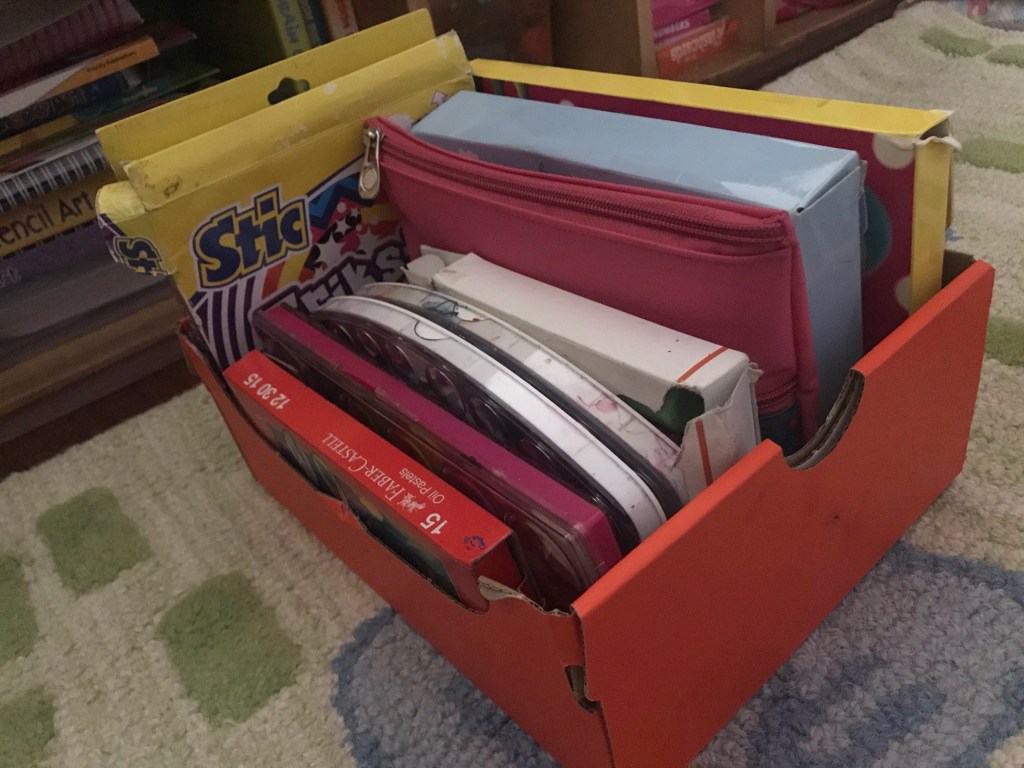
- You only need 1 of each art supply. We land up getting crayons and watercolours from gifts & return gifts. Invariably these start accumulating over time. We feel that each set has something different so let’s keep it. But the truth is they are all the same. Whether they are wax crayons or any other crayons, the colour will be the same. Whether Steadtler or Faber castell, pink will be pink and yellow will be yellow. Sometimes water colour palettes look different but trust me the kids have one favourite and they will use that ONLY. So stop loving the rest, have them pick out their favourite and put the rest in the donation box.
- Use old boxes to arrange things in a shelf. One point which the lady conducting the workshop made was that use old boxes and trays to arrange things. I have never used old cardboard boxes before, only plastic trays. This time I dug out some old shoe boxes (you know the ones we keep in the store room for “future use”) and used them to keep the water colour palettes, crayon boxes and other small toys and things.
- Another useful tip she gave was to store things vertically instead of stacking. This way everything is visible and easily accessible. By stacking things we often land up not using the bottom things. So we used that to arrange the paints and crayons etc in the boxes.
- They can only read maybe 5-10 books at a time. And I’m talking about the age group till 6-7 years when they are still reading the shorter books. If you have a child who has moved to chapter books, above 7 years, then it’s maybe 2-3 books max. The rest need to be kept away. So what we have decided is that A gets to keep 20 books(we have around 150-200) on the shelf only. The rest have been kept inside a cupboard. Every 15-20 days, or when she feels she wants to read something else, we will put these away and bring out other 20 books. That way she reads them in rotation and every book has a chance. When we were choosing the books, some long forgotten ones popped up and A was so happy to read them again.
- Categorise and organise books. So after we chose the 20 books, we divided the other books according to author or publication. Some authors we have multiple books. So we separated those out and kept them together. Then we separated all Indian published books like Tulika and Katha. One category was for fancy books like pop up books or books with music. Another was all Disney stories. And yes… how can I forget….. Peppa pig! So as per the number we had, we divided them accordingly. When we choose a fresh batch of books ,I’ll make sure she chooses some from each category so she gets a variety. What I still need to do is get boxes or baskets the size of that cupboard and arrange them. Again I will store them vertically. Not stack them. They will be put in baskets so that we can remove one at a time and go through the books. That will happen once the lockdown is over because I don’t have any boxes that size.
- Knowledge books can be kept on one shelf apart from the 20 count. One thing we agreed upon with A was that everyday or every second day we will pull out one general knowledge book of her choice and read that. My little drama queen loves fiction, but when it comes to general knowledge books….. she runs away from them. So trying to get her to read those too little by little. P loves them, so she picks them out anyway every few days and reads them.
We haven’t started sorting P’s books yet but that is soon to follow. In the meanwhile we managed to clear a few shelves and A could keep some of her tiny toys on them which were aimlessly lying around. The aim is to slowly make the playroom completely clutter free and there should be no stuff lying around or popping out from shelves. Everything should have a designated place and once used, things must go back to their place. Otherwise the whole purpose of decluttering is defeated.
 Favourite Mom
I enjoyed reading your post. I went through so much of this during COVID because we knew were going to downsize and move. I suspect I still kept too much but reading how others have done it always gives you more ideas on how you might approach it better.
LikeLike
Thank you! I hope it helped in some way 🙂
LikeLike